+1 tag for Google Plus

Monday, 30 July 2012

Dancing With the Moon - 20120728ewGypsyTest01 v002


Listen on Soundcloud.com


A piece made solely from EastWest Gypsy. My first attempt at a new music genre. I really don't know how to classify this genre. Any help would be welcome!
Started 29 july 2012, finished 31 july 2012
Instruments used:
Flamenco guitar strum
Flamenco guitar lead
Gypsy percussion
Castanets
Camp Musette
Violin
Trombone

I think all the instruments sit well with each other. The only tweak I had to do was to equalise the trombone a bit so it stands out, especially in the early part when it was a lead instrument, and that was all. 

Thursday, 26 July 2012

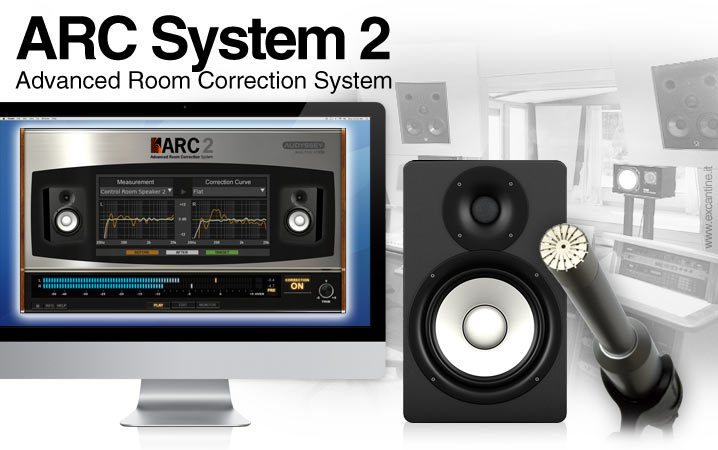
IK Multimedia Releases ARC System 2


IK Multimedia has just released ARC System 2 ARC stands for Advanced Room Correction. This is a complete set of hardware and software that will calibrate your working environment for accurate audio reproduction.

The ARC system is the only solution that combines a microphone and a corrective plug-in to correct the sound quality for the acoustic environment the user is working in:
- elegant
- low cost
- portable

ARC 2 is based on the patented technology that drives Audessy's award-winning MultEq XT32 room-correction solution. 


Implementing the ARC room-correcting solution involves sampling the characteristics of the room's acoustics. After the room is profiled, the user can specify the position(s) where the listener would be (this does not need to be just the engineer's "sweet spot").

All that takes now is the route the DAW's master bus' monitoring output through the supplied ARC's plug-in. Thus the sound that gets sent to our monitor speakers would be an accurate signal that has been de-room-ed from the room profile that was taken earlier.

ARC system is:
- the first DAW-based room-correction solution in the market
- based on Audyssey's MultEq XT32 patented technology that corrects phase and frequency distortions in any acoustic environment
- improves clarity, stereo imaging and frequency response for faster and more reliable mixing
- immediately improves the sound of any room, acoustically treated or untreated (bedroom, audio control room, etc)
- step-by-step set-up is simple and straightforward
- the plug-in is compatible to native 64-bit DAW applications
- since it is a completely mobile solution, any musician and audio engineer can now reliably work with audio material on the go, in any environment

ARC 2 improvements:
- improved interface and a new 'monitor control panel' allows for greater ease-of-use
- resolution of calibration is 4 times more accurate. This helps improve critical low-end response
- mid-range and high frequencies are now smoother and more natural sounding
- new combined L/R option maintains perfect focus with symmetrical control rooms
- new customisable target curves allow engineers to create response curves to match their preference
- new 'virtual monitoring' feature allows simulates the frequency and audio response characteristics of popular audio play-back devices like popular studio monitors, car systems, boomboxes, etc. Really useful for previewing the audio material being played back under different conditions.
- higher quality can now be achieved in fewer measurements resulting in quicker set-up time
- measurements can be saved and used for multiple correction set-ups

The included microphone used to measure the room is a calibrated, omni-directional, and has a super-linear frequency response. It's flat frequency response is the key to room measurement. 

When not used for the purpose of calibration, it can then be used as a high quality microphone to faithfully and colourlessly capture any audio signal. 

The ARC 2 sells for 249.99 Euros at IK Multimedia's online store. Existing owners of ARC version 1 are eligible for an upgrade offer of 84 Euros. 

Having coloured sound in our monitoring mix is an age-old problem we all have to deal with when we are working with sound. This problem has plagued audio engineers, musicians, even acoustic-treatment engineers. 

Many workarounds have been used over the years to overcome this problem. 

Some of us treat our rooms with acoustically isolating materials. This requires us to place permanent/semi-permanent fixtures and a hefty sum of money altering the physical room, depending on the extent of the room treatment. This method also limits the flexibility of the solution. For example, the quality of the sound would alter again if the treated room were to be re-arranged (eg, having a cupboard added to one of the walls, or moving the workstation to face in another direction. Lastly, this method is not mobile. The corrected sound can only work within the treated room and limited to a certain areas of optimal listening.

Using sound-isolating headphones can partially solve the problem. However, the closed acoustic nature of the headphones does not allow us quite the same monitoring experience or a natural environment such as an acoustically accurate space similar to the size of a rooms.

There are solutions involve measuring the phase and frequency response of the room and then running the monitoring signal through an equaliser that negates the room's frequency response. Many of these solutions are limited to providing accurate monitoring within the confines of a 'sweet spot'. That is because their room correction algorithms do not cater for multi-position measurements as input variables.

Calibrating for accurate monitoring in the audio engineering context is akin to (and every bit as critical as) calibrating the colours of a computer display for a visual artist (desktop publishing designer, graphics artist, animator, etc) Without the ability to be absolutely sure that they are handling the same colour, they will never be able to achieve a high level of accuracy on what the resulting colours will end up looking like.

For me, the most attractive additions to ARC version 2 would be 
- the simulation of multiple playback profiles allowing us to preview how our content will sound like when played from some common speakers.
- the very high accuracy measuring microphone

Started a Facebook Page

I started a Facebook page for my music!
Patrick Woo

Create your badge Facebook pages are pages with different themes. They are either used as corporate pages, pages for an organisation, or to promote certain products/services. They can fan pages. Facebook made them so that they are separate from individuals' personal pages. If I am not wrong, pages allows for a much higher number of friends. Also, pages allows for good separation from my personal stuff and updates just for my music.

Saturday, 21 July 2012

Finally, Spitfire Albion!

Finally I purchased Albion from Spitfire!

It cost me £349, and through PayPal I paid SGD714.25. This translated to a PayPal exchange rate of 1 SGD to 0.488624 GBP. 


Google's currency exchange rate gave me 0.5099775, which should have given me S$648.343. Thus I have let PayPal absorb S$29.90 from the exchange. 


Spitfire is using the downloader from Continuata Ltd. The interface is hugely familiar and similar to that of SampleLogic's Morphestra's downloader. However, this downloader is vastly faster than my download speeds with Morphestra. 


While Morphestra is 15GB in download size (losslessly compressed from 25.5GB in size), Albion has 19.51GB storage footprint (compressed also losslessly from wav samples totalling 43.28GB). 


On Morphestra the maximum speed I could achieve was 800kB/s. I am downloading Albion as I am writing this, and the speeds are fluctuating between 7700 kB/s and 3200 kB/s at peak performance. Of course it took about a minute or two to achieve this every time it starts on a new part. I am using MyRepublica fibre network based ISP.


Albion Volume 1 has won numerous awards and acclaims, and is very highly regarded by the music community. The quality of  Spitfire's libraries has well been established way before this commercial release of Albion. Before Albion, they were already creating very high quality virtual instruments and libraries for the award winning films and used by award winning composers. These composers were approached by invitation only. That is why I am so happy that they have made Albion available to the rest of us. :)


What I like about Albion 1 (without having yet played it) is of course, its beautiful sonic and musical quality. Also, I like the fact that it is complete on its own, with all mic positions (5.1 miking to be precise!), and all the sections of the orchestra articulations it has to offer. There is no 'lite edition', or different tiers to stepped-up your levels of ownership, or extra mic positions to upgrade to. 


I also found an article on theAudioSpotlight.com that interviews Spitfire on Albion 1, which sheds light on the company beginnings, what drives them, and where they are heading (of course we might also get hints on what good stuff they have for us in the months to come!)

TheAudioSource.com or TAS has lots of great articles and video interviews with artists who are composers, producers and sound designers. Like the Spitfire interview, TAS also interviews companies that develop the tools we use every day.

Following the immense success of Albion 1 from the music community, Albion 2 is in the works and will be released in the near future. There is already 1 demo track out for you folks who are eager to get a taste of what it will sound like.


Besides the Albion series, which aims to provide a complete set of orchestral tools in sections and clusters, Spitfire also has instruments that stand on their own, which they call their 'definitive range' of products. These are single instruments or groups of intruments that are positioned to be the best in their class and future-proofed for a wide range of different musical usage. Examples of these are the solo Harp, an Orchestral Grand Piano, and the Harpsichord


Spitfire also has a 'Spitfire Laboratories' section where they 'give away' free instruments which are the results of Spitfire's experimentation on various sample techniques that eventually drive their products. They have generously offered these as free, but require a minimum amount of donation to Unicef, the charity organisation that helps to build the world, supplying to needy parts of the world. This is a noble and inspiring cause and it reflects the 'giving-back' attitude of Spitfire. 

Sunday, 15 July 2012

Garritan Interactive Principles of Orchestration on NorthernSounds.com

On a forum on NorthernSounds.com, I found that Garritan has sponsored a thread with lots of instructional and helpful music resources to help artists and composers in their musical journey.

Rimsky Korsakov
One of these awesome resources is the Garritan Interactive Principles of Orchestration.

This interactive resource aims to adapt as faithfully as possible from the original translation text from nearly a century ago, by Rimsky Korsakov, the Russian master of orchestration. The awesome benefit of this online version is that the are a lot of interactive elements like visual scores and audio clips to illustrate and drive home exactly the point the text is making.

Saturday, 14 July 2012

Beat Chaser - 20120711ewMorTest v001 03


Listen to this on SoundCloud.com

This is the newest composition I've created. It is a rock piece called Beat Chaser. Working on this on the side, I started working on the piece on 11 July 2012, and finished it on 14 July 2012.

Created in FL Studio 10, all instruments are from EastWest's Ministry of Rock 2.

I composed this to test and showcase the instruments in Ministry of Rock 2 which I recently acquired. This is also my very first attempt at composing for this genre.

Only one of the lead guitars had an ImageLine effects plugin applied. The rest get their effects straight off EastWest's play engine.

Patches used:
MoR2 Kit
Fender Jazz Bass KS
Baritone Rhythm Guitar KS
CarvinBridgeLead KS
TelecasterLead KS (Image-Line Hardcore guitar fx applied)


Something to look out for in the piece:
- some time-signature changes from 29s to 35s. There are 2 cycles of 3/4 then 1/4.
- cowbells from 35 seconds onwards (Alvin this is for satisfying your cowbell obsession!)


I am very surprised at how pleasant the instruments sound. I did not really need any heavy processing to get them sound the way they do. All the rhythm and lead guitars in the piece have their outputs sampled straight from the guitar before amplification, as well from guitar amps. The TelecasterLead only has the clean samples. That is why I had to use the Image-Line Hardcore guitar fx on the Telecaster.

I have always had the idea that there are many more guitarists in Singapore than musicians who play any other kinds of instruments. (I did a search and the guitar and the electric guitar are in the list of the most popular instruments in the world, along with the piano, violin, viola, cello, drums, flute, clarinet and the piccolo. Some links, here and here.) So much so that I somehow feel that I am at a disadvantage not knowing how to play the guitar. :(

The guitar has such high level of expressive freedom, that to re-create a performance with virtual instruments will have a very high possibility of sounding fake, since we all know how a guitar would sound like, being played by a human musician.

However, seeing so many virtual instrument(VI) libraries featuring sections of an orchestra and even entire orchestras with complicated articulations being sampled, and having heard EastWest MoR 2 demos, I was convinced that I could make some decent pieces of music from guitars after all. These would definitely beat the guitars from EWQL Goliath and Kontakt Factory patches. :) That is part of the reason why I acquired the MoR2 in EastWest's buy-one-get-one-free sale.

It is very interesting that before this, I have not had any desire to attempt at creating a piece of guitar-heavy rock music. This genre isn't really my favourite kind of music. However, the results sound quite promising, but of course it is not perfect. For one, the structure probably isn't very polished. There are probably quite a lot of areas in the playing style and sound that rock composers and producers would look out for, that come with years of working with the genre.

Despite my inexperience with the genre, I was so surprised when during the composing process, I could find quite a number of compositional and arrangement devices in me to push the composition along. I was listening quite a bit from Nick Phoenix's demos on MoR1 and MoR2 product pages. I suspect I subconsciously picked up something from those demos. Also, I had a few opportunities to be helping out in events and studio recording sessions when a rock band was playing. I think all these add up to how well we hear/observe and how we can then make those things our own to use when we need them.


Tuesday, 10 July 2012

Subscribed to Soundcloud Lite

I upgraded my SoundCloud account from the 'free' to the 'lite' plan. 


I like the fact that SoundCloud gives me a professional place showcase my music, which is filled with fellow music-lovers to interact with. 


I especially like the fact that people can comment on a track at a specific time. What's more, it's awesome that I can embed their player together with the comments on any blog, and share the link to my tracks on social sites.
All the above are available to the free account. However, the most important features that affected my decision to upgrade my account, are:
- the ability to replace any uploaded track with a new version of the same track, while keeping the played stats and comments
- increased upload quota
- a slightly more detailed analysis of the people who listen to my tracks